
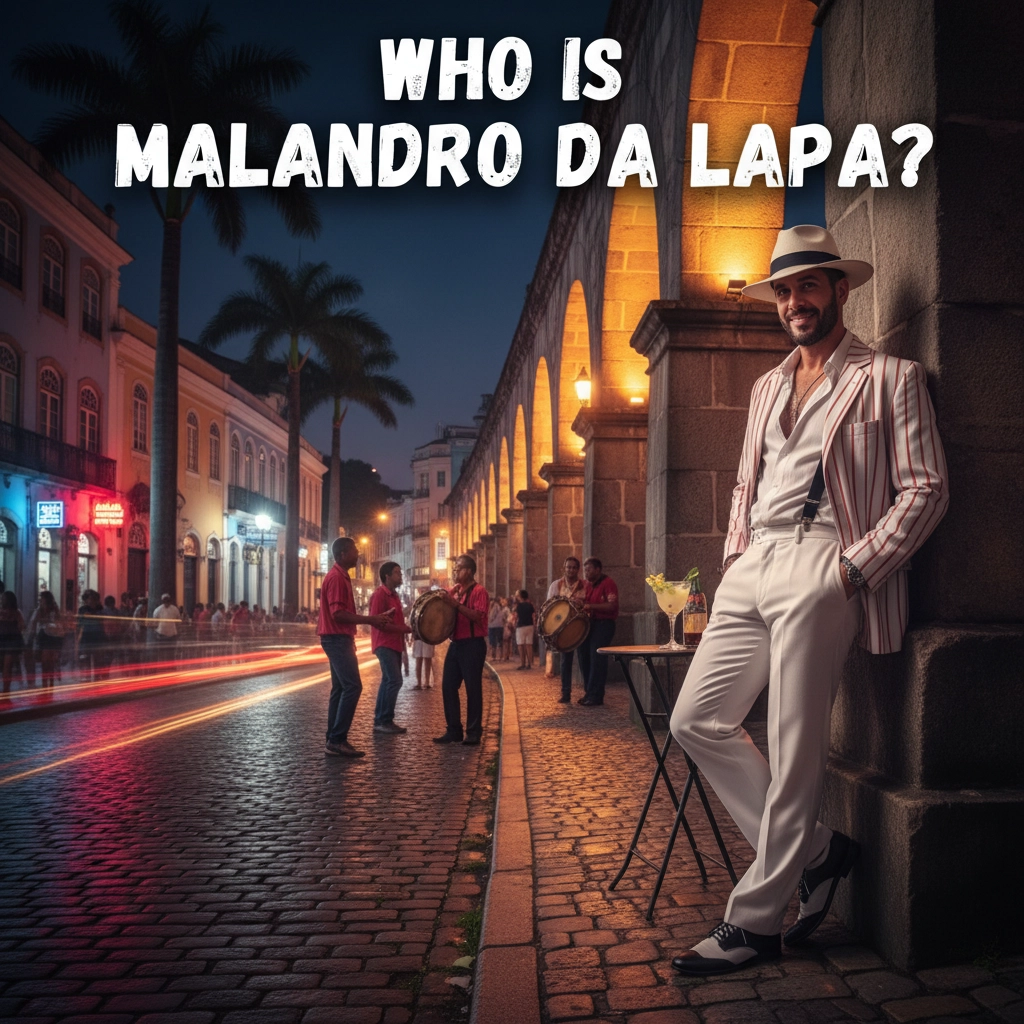
When the night falls over Rio de Janeiro's most infamous district, something magical happens. The cobblestones of Lapa whisper stories of cunning, charisma, and spiritual power that have echoed through generations. But who exactly is Malandro da Lapa? Far more than a single person, this figure represents a living archetype that bridges the gap between street wisdom and sacred tradition: a masculine force that commands respect in both the physical and spiritual realms.
The Soul of Rio's Bohemian Heart
Picture this: the year is 1930, and Lapa pulses with the rhythm of samba, the clink of glasses, and the shuffle of cards. Here, where the famous Selarón Steps now draw tourists, a different kind of man once ruled the night. The Malandro da Lapa wasn't just any street-smart operator: he was the embodiment of Brazilian masculinity at its most complex and compelling.
These men didn't simply survive the streets; they mastered them with an art form all their own. Dressed in their signature attire, often sporting sharp white suits with carefully chosen accessories, they moved through Lapa's labyrinthine alleys with the confidence of kings in their domain. Their wisdom wasn't learned in schools but earned through late-night negotiations, protecting those who couldn't protect themselves, and navigating the delicate balance between charm and danger.

What made the Malandro da Lapa truly distinctive was his code of honor. Unlike common criminals, these men operated by a strict set of principles rooted in respect, loyalty, and protection of the vulnerable. They served as unofficial guardians of the district's women, wielding their razors not for random violence but as tools of justice in a world where traditional law enforcement often fell short.
Where Street Wisdom Meets Sacred Power
The spiritual dimension of Malandro da Lapa runs deeper than most realize. In the Afro-Brazilian traditions of Umbanda and Quimbanda, the malandro represents a powerful spiritual archetype that bridges earthly cleverness with divine protection. This isn't mere folklore: it's a living tradition that recognizes the sacred masculine energy embodied by these street philosophers.
Within the spiritual hierarchy, malandros form their own distinct line of entities, with deep roots tracing back to Pernambuco and the city of Exu. The spiritual Malandro da Lapa carries all the worldly wisdom of his earthly counterparts while possessing the enhanced abilities that come with spiritual evolution. He understands the language of the streets, the politics of survival, and the delicate art of turning disadvantage into victory.

When practitioners call upon Malandro da Lapa in spiritual work, they're invoking a entity who knows intimately the struggles of urban life, the challenge of maintaining dignity in difficult circumstances, and the power that comes from authentic charisma. His energy is particularly potent for those seeking guidance in matters of street wisdom, protection in dangerous situations, and the kind of magnetic personal presence that commands respect without demanding submission.
The Legendary Madame Satã: Malandro Incarnate
No discussion of Malandro da Lapa would be complete without honoring João Francisco dos Santos, better known as Madame Satã: perhaps the most famous malandro in Brazilian history. Born in Pernambuco in 1900, Satã arrived in Rio as a child and proceeded to become a living legend who perfectly embodied the malandro archetype.
Satã was simultaneously an artist and an outlaw, a drag performer and a feared fighter, a man who spent 27 years in prison yet remained beloved by those who knew him. His life read like a novel: he was an actor, dancer, and drag queen who brought unprecedented artistry to Rio's nightlife while maintaining the dangerous edge that defined true malandros.

What made Satã legendary wasn't just his flamboyant performances or his reputation for violence when necessary: it was his absolute authenticity. He refused to be diminished by society's expectations, creating his own rules and living by them with unwavering commitment. Even in prison, he maintained his dignity and charisma, earning respect from both guards and inmates.
By the 1970s, Satã had retired from Lapa's dangerous streets to live peacefully on Ilha Grande, where he tended a farm and did honest work. His death in 1976 marked the end of an era, inspiring Chico Buarque's famous observation that the old style of malandragem no longer existed. Yet Satã's spirit lives on, both in cultural memory and in the spiritual traditions that honor his archetype.
The Wisdom of the Night: Understanding Malandro Philosophy
The malandro tradition isn't about celebrating criminality: it's about recognizing a sophisticated form of masculine wisdom that emerges from navigating society's margins. The Malandro da Lapa understood truths that escape those who live entirely within conventional structures. He knew that sometimes survival requires creativity, that respect must be earned rather than demanded, and that true power comes from understanding human nature in all its complexity.
This wisdom tradition recognizes several key principles that define authentic malandro energy. First, the importance of style: not superficial fashion, but the deeper concept of maintaining dignity and presence regardless of circumstances. Second, the value of adaptability: being able to read situations quickly and respond appropriately. Third, the sacred nature of loyalty: standing by those who have earned your respect and protecting those who cannot protect themselves.

Modern practitioners who work with Malandro da Lapa energy often find guidance in navigating urban challenges, developing personal magnetism, and learning to turn disadvantage into opportunity. His wisdom is particularly relevant for men seeking to develop authentic masculine presence without resorting to toxic aggression or manipulation.
Living Tradition in a Modern World
The spirit of Malandro da Lapa hasn't disappeared with the changing times: it has evolved to meet contemporary needs while maintaining its essential character. Today's urban warriors face different challenges than those of 1930s Lapa, but the core wisdom remains remarkably relevant.
In spiritual practice, Malandro da Lapa serves as a guide for those navigating the complexities of modern city life. His energy is particularly valuable for developing the kind of street intelligence that can't be taught in books: the ability to read people's true intentions, to present oneself with magnetic confidence, and to protect oneself and others through presence rather than aggression.
The traditional offerings associated with Malandro da Lapa reflect his earthly origins and refined tastes: quality cigars, aged cachaça, red roses, and items that demonstrate respect for his sophisticated nature. Practitioners often approach him at crossroads: both literal and metaphorical: seeking guidance in moments of important decision-making.
The Enduring Power of Authentic Masculinity
What makes Malandro da Lapa eternally relevant is his representation of masculinity that is both powerful and refined, dangerous when necessary but never cruel without cause. He embodies a form of male energy that modern society desperately needs: strength combined with wisdom, confidence balanced with respect for others, and the kind of authentic charisma that inspires loyalty rather than fear.

In a world where toxic masculinity often masquerades as strength, the Malandro da Lapa model offers a different path. His power comes not from domination but from mastery of self and situation. His respect is earned through actions rather than demanded through intimidation. His wisdom is shared freely with those who approach him with genuine intent.
For those called to work with this powerful archetype, Malandro da Lapa offers guidance in developing the kind of masculine presence that honors tradition while adapting to contemporary challenges. He teaches that true strength lies not in overpowering others but in mastering oneself, and that the greatest victories come not from defeating enemies but from transforming potential conflicts into opportunities for mutual respect.
The legacy of Malandro da Lapa continues to inspire those who understand that some of life's most important lessons are learned in the shadows, and that wisdom often wears the face of the outlaw. His tradition reminds us that authentic power requires no apology, genuine charisma needs no pretense, and true masculine strength serves something greater than itself.