
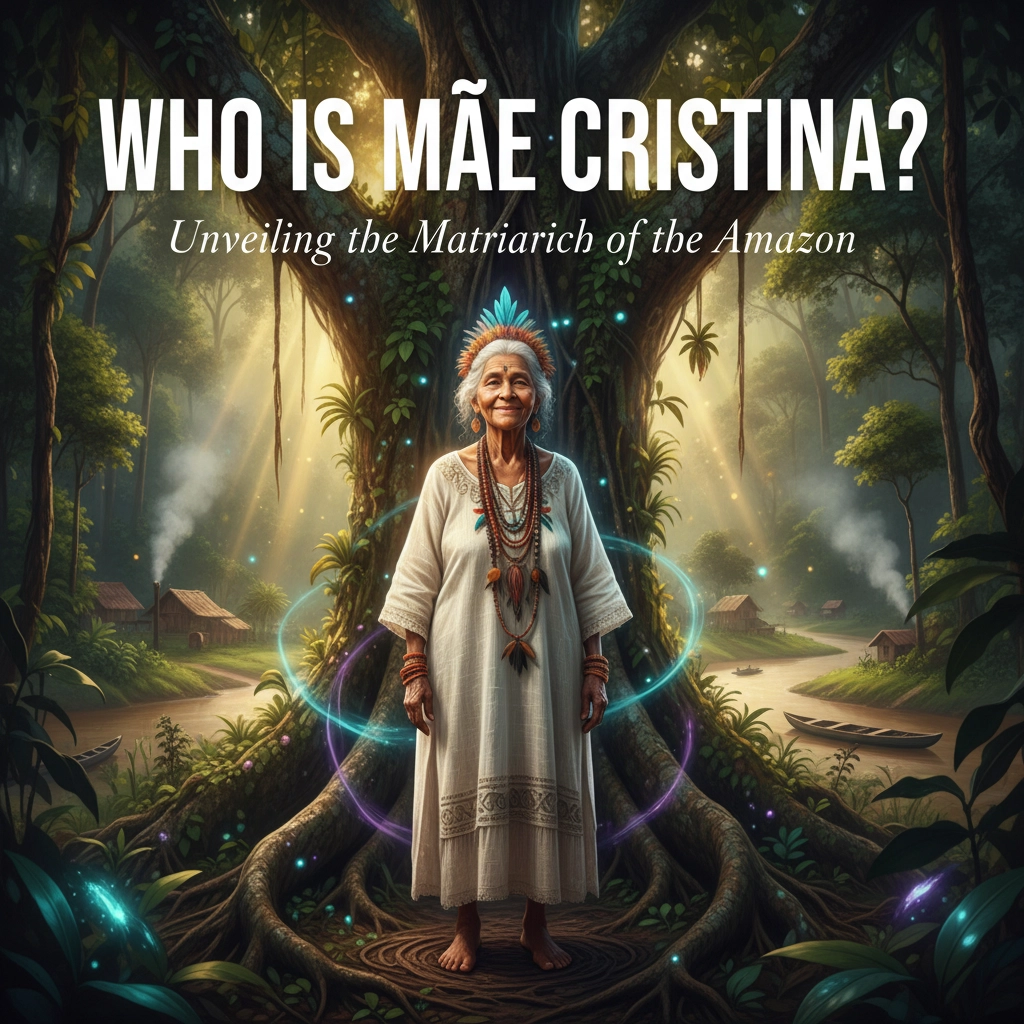
In the sacred spaces where ancestral wisdom meets community care, where kitchen prayers transform simple ingredients into spiritual nourishment, stands a figure whose very name carries the weight of tradition: Mãe Cristina. But who is this woman whose hands craft more than mere meals, whose presence bridges the gap between the material and the mystical?
Many people think they understand what it means to feed a community. They imagine simple charity, basic sustenance, the mechanical act of providing calories. They're missing the profound spiritual architecture that transforms cooking into ceremony, meals into medicine, and kitchens into temples.
The Sacred Art of the Quituteira
Mãe Cristina operates as a quituteira: a term that carries layers of meaning far beyond its simple translation as "food vendor." In Afro-Brazilian communities, the quituteira represents something revolutionary: the preservation of ancestral knowledge through the most intimate of human needs: nourishment.

Where industrial food systems strip away culture and connection, Mãe Cristina creates what practitioners call "comida de Santo": sacred food that carries the essence of spiritual tradition. This isn't just cooking; this is cultural resistance served one plate at a time.
Her work embodies the principle that food preparation is spiritual practice. Every ingredient selection becomes a form of divination, every seasoning choice an offering, every meal served a blessing extended from her hands to her community's hearts.
Beyond Hunger: The Spiritual Ecology of Community Care
What transforms Mãe Cristina from cook to cultural guardian? The answer lies in understanding the deeper currents that flow through Afro-Brazilian spiritual traditions.
In traditions like Candomblé, Umbanda, and other Afro-diasporic practices, food serves as a bridge between worlds. The orixás, ancestral spirits, and guiding forces all have their preferred offerings, their sacred meals, their particular tastes that when honored correctly, open channels of communication and blessing.
Mãe Cristina doesn't just follow recipes: she maintains these sacred relationships through her culinary practice. When she prepares a meal, she's performing a ritual that connects her community to their ancestors, their spiritual guides, and their own cultural identity.

The Revolutionary Act of Feeding with Empathy
Here's where Mãe Cristina's story becomes truly transformative: she combines this sacred food preparation with what can only be described as radical empathy. In a world that often reduces human interaction to transaction, she creates spaces where nourishment becomes communion.
This empathy isn't soft or sentimental: it's strategically powerful. When someone receives food prepared with genuine care and spiritual intention, they're not just being fed. They're being seen, acknowledged, and included in a web of community support that has sustained African diaspora communities for centuries.
Her approach challenges the modern world's disconnection from both our food sources and our spiritual sources. Where fast food culture promotes isolation and spiritual emptiness, Mãe Cristina creates gathering points where bodies are fed and souls are restored.
Preserving Ancestral Wisdom Through Daily Practice
The most remarkable aspect of Mãe Cristina's work lies in how she transforms the everyday into the sacred without losing touch with practical needs. This balance represents the essence of traditional spiritual practice: not removed from daily life, but deeply embedded within it.
Traditional food preparation in Afro-Brazilian communities carries genetic memory. The techniques, combinations, and rituals passed down through generations contain wisdom about nutrition, healing, and spiritual practice that modern science is only beginning to understand.

When Mãe Cristina prepares her comida de Santo, she's accessing knowledge systems that have survived slavery, colonization, and centuries of cultural suppression. Her kitchen becomes a repository of resistance, a place where ancestral wisdom finds expression through contemporary practice.
The Sacred Economics of Community Nourishment
Understanding Mãe Cristina requires grasping the different economic principles that govern traditional community care. She operates within what anthropologists call "gift economy": systems where value flows through relationship and reciprocity rather than pure monetary exchange.
This doesn't mean her work isn't economically sustainable. Rather, it means she's embedded within community networks where her spiritual and culinary labor creates multiple forms of value that sustain both her and those she serves.
Her quituteira practice represents economic justice in action. Instead of extracting wealth from her community, she circulates nourishment, care, and spiritual support that strengthens the entire social fabric.

Modern Challenges, Ancient Solutions
In an era where traditional knowledge keepers face unprecedented challenges: gentrification displacing communities, industrial food systems undermining local practices, and younger generations losing connection to ancestral ways: Mãe Cristina's work takes on urgent significance.
She's not just preserving the past; she's demonstrating how ancient wisdom can address contemporary problems. Food insecurity, social isolation, spiritual disconnection, cultural amnesia: her practice offers integrated solutions that industrial approaches cannot match.
The wisdom she carries forward isn't museum knowledge: it's living, breathing, actively transformative practice that meets people's needs on multiple levels simultaneously.
The Ripple Effects of Sacred Service
When we examine Mãe Cristina's impact, we discover something remarkable: her influence extends far beyond the individuals she directly feeds. Her practice creates what traditional communities call "axé": the flowing spiritual energy that blesses entire communities.
People who receive her food carry that blessing forward into their own relationships. Children who grow up eating her comida de Santo internalize messages about cultural pride, community care, and spiritual connection. Adults who witness her practice learn models for integrating service with spirituality.

Her work demonstrates that individual healing and community transformation are not separate processes but interconnected aspects of the same sacred work.
Learning from Mãe Cristina's Legacy
What can we learn from this remarkable woman whose name appears in discussions of ancestral food traditions? Her example teaches us that spiritual practice doesn't require retreat from the world but deeper engagement with community needs.
She shows us that cultural preservation happens not in museums but in kitchens, not through academic study but through daily practice, not in isolation but in service to others.
Her approach offers a template for anyone seeking to integrate their spiritual growth with community contribution: proving that the most profound transformations often happen around dinner tables rather than in formal ceremony spaces.
The Continuing Journey
Mãe Cristina represents thousands of culture keepers throughout the African diaspora who maintain spiritual traditions through practical service. Her story reminds us that the sacred and the practical are not opposites but partners in the work of community building and cultural continuance.
In a world hungry for both physical nourishment and spiritual meaning, her example points toward integrated approaches that feed the whole human being. She embodies the truth that sometimes the most revolutionary act is simply preparing a meal with love, intention, and ancestral wisdom.
The revolution happens one plate at a time, one blessing at a time, one moment of genuine care at a time. This is the lesson of Mãe Cristina; that transformation begins not with grand gestures but with the sacred courage to feed our communities with our whole hearts.