
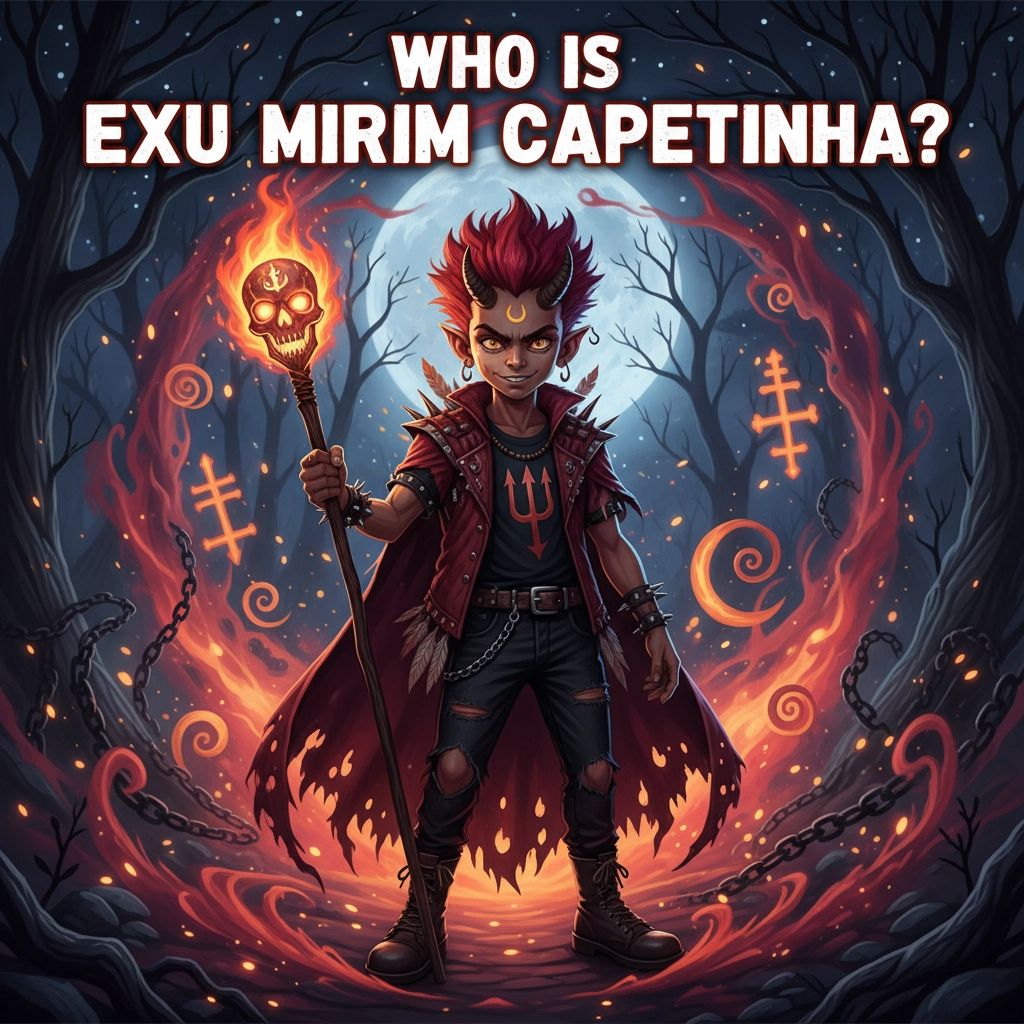
What if everything you thought you knew about "little devils" was completely wrong? In the rich tapestry of Umbanda and Kimbanda traditions, few entities are as misunderstood: and as powerful: as Exu Mirim Capetinha. While mainstream culture might paint a picture of mischievous imps, the reality of this spiritual force runs far deeper into the sacred waters of Afro-Brazilian spirituality.
The name itself tells a story: "Mirim" meaning small or young, and "Capetinha" translating to "little devil": but here's where the misconceptions begin and the truth emerges. This isn't about horned creatures from medieval nightmares. This is about one of the most misunderstood yet essential spiritual workers in the Umbanda pantheon.
Beyond the Stereotype: Who Exu Mirim Really Is
When practitioners speak of Exu Mirim Capetinha, they're not invoking some cartoonish demon. They're calling upon a sophisticated spiritual entity that embodies the archetypal energy of adolescence: rebellious, transformative, and operating in that liminal space between childhood innocence and adult responsibility.
In Umbanda tradition, Exu Mirim represents a specific line of spiritual work, a class of entities that function within what practitioners call the "left line." But don't let the terminology fool you: there's nothing sinister about this classification. The left line simply refers to spirits that work with transformation, breaking down obstacles, and clearing spiritual debris.
These entities are often called "children of the left," though this description requires careful understanding. Exu Mirim spirits aren't actually children in any literal sense. Instead, they embody specific archetypal qualities: the energy of youth in transition, the rebellious spirit that questions authority, the group mentality of adolescents, and that restless searching for identity that characterizes the teenage years.

The Spiritual Mechanics of Exu Mirim's Work
What makes Exu Mirim Capetinha particularly fascinating from a ritual perspective is his dual function as both disruptor and purifier. While his energy might appear playful or mischievous on the surface, practitioners understand that this playfulness serves a deeper spiritual purpose: environmental cleansing.
Think of it this way: when a terreiro (spiritual center) becomes heavy with negative energy, stagnant with unprocessed emotions, or blocked by spiritual debris, Exu Mirim doesn't approach the problem with solemn ceremony. Instead, he brings levity, movement, and what appears to be chaos but is actually systematic reorganization.
This entity excels at finding hidden things and concealing what needs to be protected. In practical terms, this translates to helping practitioners locate lost objects, uncover hidden truths, or shield important spiritual work from interference. His influence in the astral plane makes him particularly valuable for dream work and spiritual navigation.
The Protector of the Vulnerable
Perhaps nowhere is Exu Mirim Capetinha's true nature more evident than in his role as protector of street children and guardian of the vulnerable. This isn't coincidental: it reflects a deep understanding within Umbanda of how spiritual archetypes connect to real-world needs.
Street children, abandoned youth, and those existing on society's margins share something with the archetypal energy of Exu Mirim: they operate outside conventional structures, develop survival instincts, form their own communities, and navigate a world that often views them with suspicion or fear.
When practitioners work with Exu Mirim Capetinha for protection of vulnerable populations, they're tapping into this entity's intimate understanding of marginalization and resilience. He knows what it means to be misunderstood, to have your true nature obscured by surface appearances, to find strength in the spaces others avoid.

Ritual Relationship: Working with Exu Mirim
The relationship between practitioner and Exu Mirim Capetinha isn't one of worship or supplication: it's partnership. This entity responds to authentic communication, straightforward requests, and practitioners who understand that spiritual work requires both respect and results.
Traditional offerings to Exu Mirim often include items that reflect his youthful energy: candies, toys, colorful objects, and playful items. But these aren't childish gifts: they're symbolic representations of joy, spontaneity, and the kind of unguarded openness that allows for genuine spiritual transformation.
The colors associated with Exu Mirim typically include red and black, representing transformation and power, but also bright, vibrant hues that reflect his energetic nature. Practitioners might also incorporate items that speak to his protective role: small shields, keys (for unlocking and locking), or mirrors (for revealing truth and deflecting negativity).
The Theological Debate: Incarnated or Enchanted?
Within Umbanda theology, there's ongoing discussion about the nature of Exu Mirim entities. Some practitioners believe these spirits are "enchanted beings": entities that have never experienced human incarnation but exist as pure archetypal forces. Others maintain that Exu Mirim spirits are evolved souls who have completed human lifetimes and now work from the spiritual realm.
This debate isn't merely academic: it affects how practitioners approach relationship with these entities. Those who view Exu Mirim as enchanted beings might work with them as forces of nature, cosmic principles made manifest. Those who see them as evolved spirits might approach them more personally, as wise guides who understand human struggles from direct experience.
What both perspectives agree on is Exu Mirim's role as executor of universal law. This entity doesn't work based on personal preference or favoritism. Instead, he operates according to spiritual principles, evaluating intentions, and responding to genuine need rather than surface requests.

Misconceptions and Modern Relevance
The greatest disservice to understanding Exu Mirim Capetinha comes from trying to fit this complex spiritual entity into simplistic good-versus-evil frameworks. The "little devil" archetype, when properly understood, represents the necessary chaos that breaks down outdated structures, the rebellious energy that questions unjust authority, and the transformative force that clears away what no longer serves.
In contemporary practice, many people find Exu Mirim Capetinha particularly relevant for dealing with situations that require thinking outside conventional solutions. Whether it's breaking through creative blocks, navigating bureaucratic obstacles, or finding unconventional approaches to persistent problems, this entity's archetypal energy offers fresh perspectives.
His protective aspect has particular resonance in an era when many young people face unprecedented challenges. Practitioners working with at-risk youth, social justice causes, or community protection efforts often find Exu Mirim Capetinha a powerful ally in their efforts.
The Path Forward: Understanding Through Practice
Truly knowing Exu Mirim Capetinha requires moving beyond intellectual understanding into experiential knowledge. This means approaching this entity with the respect due any powerful spiritual force while maintaining the openness and authenticity that this archetype particularly values.
For those called to work with Exu Mirim Capetinha, the path typically begins with simple offerings and honest communication. This isn't about elaborate rituals or complex ceremonies: it's about establishing genuine spiritual relationship based on mutual respect and clear intention.
The transformation that comes through working with Exu Mirim often manifests as increased ability to navigate challenging situations, enhanced protection for vulnerable aspects of life, and a deeper understanding of how apparent chaos can serve spiritual evolution.
Rather than fearing the "little devil" energy, practitioners learn to work with it as a force for positive change, protection of the innocent, and transformation of stagnant situations into opportunities for growth.
Exu Mirim Capetinha represents far more than simplified notions of good and evil might suggest. This entity embodies the complex, necessary energy of transformation, protection, and spiritual clearing that makes genuine spiritual evolution possible. Understanding this archetype opens doorways to more effective spiritual practice and deeper appreciation for the sophisticated spiritual psychology that underlies Umbanda tradition.