
When Urban Legends Meet Sacred Truth
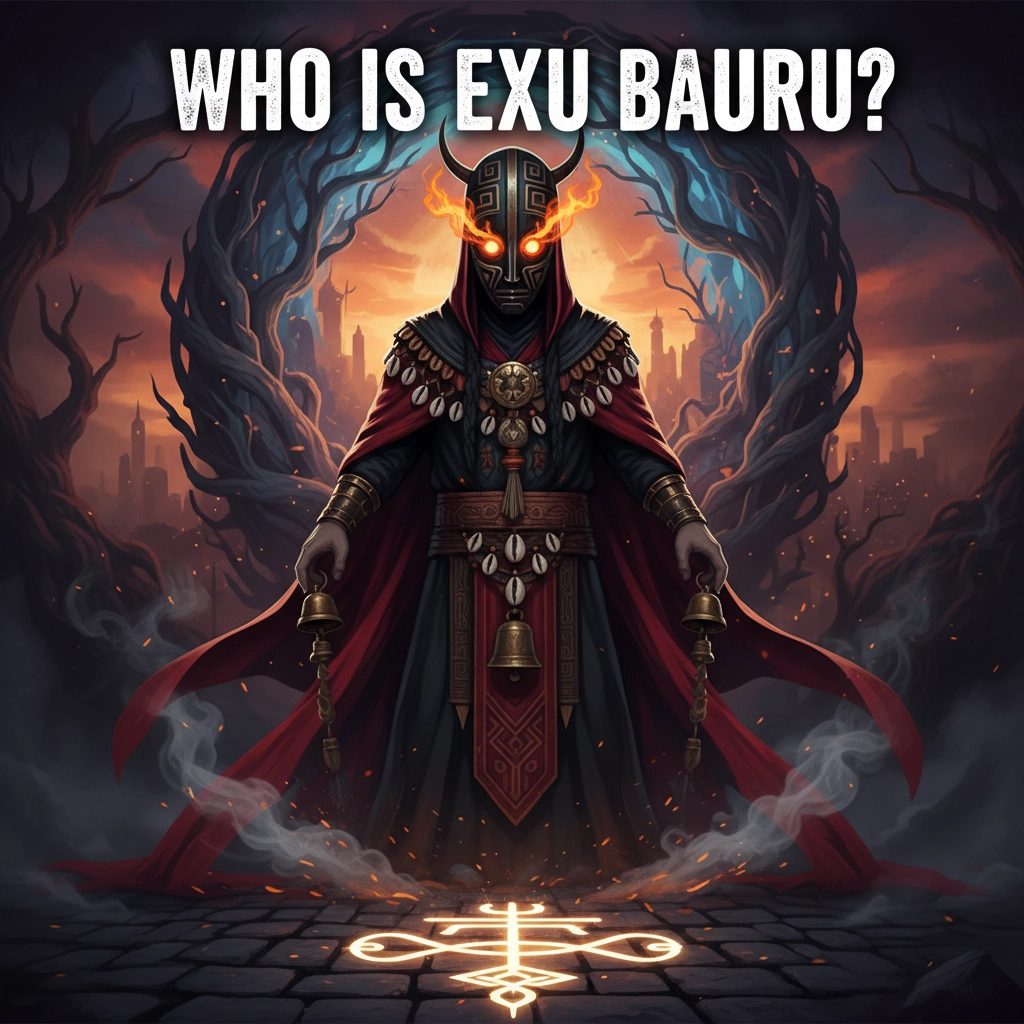
Picture this: a bustling Brazilian city where the scent of street food mingles with incense from hidden spiritual houses, where modern skyscrapers cast shadows over ancient crossroads ceremonies. In this intersection of old and new, we encounter one of the most intriguing figures in Afro-Brazilian spirituality: Exu Bauru, a spirit whose very name carries the essence of place, power, and urban mysticism.
But here's where most people get it wrong. They think every Exu is just another name in an endless list of spirits, interchangeable and generic. The truth? Each Exu carries the DNA of their territory, the heartbeat of their people, and the specific medicine their community needs. Exu Bauru isn't just another spirit: he's a living testament to how sacred traditions adapt, evolve, and root themselves in the concrete and steel of modern Brazil.

What Makes Regional Exus So Powerful?
We're not talking about cookie-cutter spirituality here. Regional Exus like Bauru represent something revolutionary in the spiritual landscape: they're proof that the sacred doesn't just survive modernization, it thrives within it. These spirits emerge from the unique energetic signatures of specific places, carrying the hopes, struggles, and victories of local communities.
Think about Bauru, the city in São Paulo state known for its agricultural abundance and urban development. An Exu bearing this name would naturally embody the intersection of rural tradition and urban progress, the crossroads where old wisdom meets new opportunities. This isn't coincidence: it's spiritual geography in action.
The power lies in specificity. While mainstream spirituality often seeks the universal, Kimbanda recognizes that true transformation happens when the sacred meets the specific, when ancient wisdom addresses modern realities with precision and relevance.
The Sacred Science of Crossroads Spirits
Here's what anthropologists and spiritual scholars are finally beginning to understand: Exu spirits function as spiritual GPS systems, navigating the complex terrain between worlds, between what was and what could be. They're not just guardians: they're active participants in the ongoing creation of reality itself.
In Kimbanda tradition, Exu serves as the great communicator, the one who carries messages between the human and spirit realms. But regional Exus like Bauru take this role further, becoming specialized in the particular challenges and opportunities of their geographic and cultural territories.

This specialization manifests in several ways:
Territorial Knowledge: They understand the specific energetic currents of their region
Cultural Translation: They speak both ancient spiritual languages and modern urban dialects
Community Integration: They work within existing social structures while challenging limiting beliefs
Adaptive Power: They evolve their methods while maintaining core spiritual principles
Why Urban Exus Challenge Everything We Think We Know
The emergence of spirits like Exu Bauru represents a spiritual revolution that's been quietly transforming Brazilian religious landscapes for decades. These aren't watered-down versions of "traditional" spirits: they're evolution in action, proof that authentic spirituality doesn't fossilize in the past but grows stronger through engagement with contemporary life.
Traditional spiritual systems often struggle with urbanization, losing relevance as communities move from rural to city environments. But Kimbanda's embrace of urban Exus demonstrates something profound: the sacred can be thoroughly modern without losing its power or authenticity.
Consider what this means for spiritual practice. Instead of trying to escape modern life to find the sacred, practitioners work with spirits who understand traffic jams and internet connections, who navigate bureaucracy as skillfully as they traverse spiritual realms.
The Ritual Reality of Regional Connection
When practitioners work with Exu Bauru, they're not just performing generic ceremonies: they're engaging with a spirit who understands their specific cultural context, their particular struggles and aspirations. This creates a level of relevance and effectiveness that generic spiritual approaches simply can't match.

The ritual elements reflect this specificity:
Offerings: Local foods and items that resonate with regional culture
Timing: Ceremonies aligned with local festivals, agricultural cycles, or urban rhythms
Language: Invocations that blend Portuguese, indigenous terms, and local slang
Symbolism: Images and objects that reflect both ancient wisdom and contemporary reality
This isn't spiritual tourism or cultural appropriation: it's organic spiritual evolution, communities creating sacred relationships that honor their ancestors while addressing their current needs.
Breaking the Academic Silence
Here's something that needs to be said: mainstream religious studies has largely ignored the sophisticated theological developments happening in communities practicing traditions like Kimbanda. While academics debate abstract concepts, real communities are creating profound spiritual innovations that deserve serious attention and respect.
The development of regional Exus represents grassroots theology at its finest: communities taking ancient wisdom and making it relevant to their lived experience. This isn't dilution of tradition; it's tradition fulfilling its highest purpose by serving the spiritual needs of real people in real situations.
What This Means for Modern Spiritual Seekers
The story of Exu Bauru and similar regional spirits offers crucial insights for anyone seeking authentic spiritual connection in the modern world:
Relevance Matters: Effective spirituality speaks to your actual life, not some idealized version of it
Place Has Power: Your geographic and cultural location shapes your spiritual needs and opportunities
Evolution Is Sacred: Traditions that adapt and grow are often more authentic than those that remain frozen
Community Creates: The most powerful spiritual developments emerge from communities, not individuals

This challenges the common assumption that "older is automatically better" in spiritual matters. While honoring ancestral wisdom remains crucial, the emergence of spirits like Exu Bauru demonstrates that the sacred continues to manifest in new forms, addressing contemporary challenges with fresh energy and insight.
The Future of Urban Spirituality
As Brazil continues urbanizing and globalizing, we can expect to see more regional Exus emerging, each carrying the unique spiritual signature of their territory and community. This isn't fragmentation: it's diversification, the spiritual equivalent of biodiversity.
These developments point toward a future where spirituality becomes increasingly localized and relevant while maintaining connection to ancient wisdom. Instead of choosing between tradition and modernity, communities create synthesis, honoring the past while embracing the present.
The technology serves the tradition, not the other way around.
Embracing the Mystery
Perhaps what's most remarkable about figures like Exu Bauru is how they remind us that the sacred remains active and creative in our world. While some lament the loss of "traditional" spirituality, these regional spirits demonstrate that the divine continues to manifest in new forms, speaking languages their communities understand, addressing challenges their people actually face.
This doesn't diminish the mystery: it relocates it from distant history to present reality, from exotic locations to familiar neighborhoods. The crossroads where Exu Bauru works might be at a busy intersection in downtown São Paulo, but the spiritual principles at work remain as profound as any ancient ceremony.
The whispers of the ancestors aren't fading; they're finding new voices, new forms, and new relevance. In understanding spirits like Exu Bauru, we glimpse not just the past of Afro-Brazilian spirituality, but its dynamic, creative future.