
What if the most profound healing wisdom comes not from medical textbooks, but from the weathered hands of an enslaved ancestor who transformed suffering into sacred medicine? Meet Pai José De Angola: a spiritual force whose presence in Umbanda traditions challenges everything we think we know about ancestral power and healing.
The Elder Who Refuses to Be Forgotten
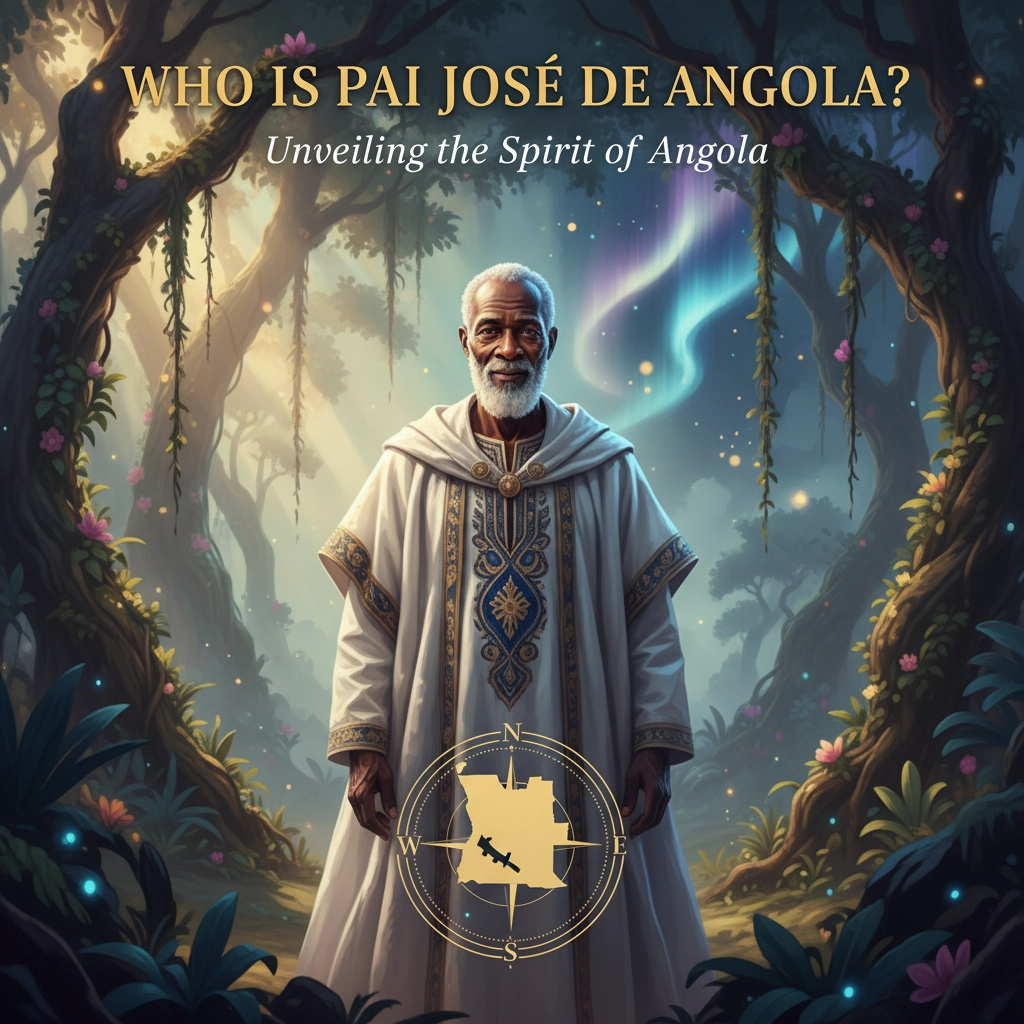
Pai José De Angola stands as one of the most revered Pretos-Velhos in Brazilian Umbanda, but his story reaches far deeper than religious categorization. This isn't just another spirit guide: this is ancestral rebellion made manifest, wisdom forged in the crucible of colonial oppression, and healing power that transcends the boundaries between life and death.
In the sacred spaces of Umbanda terreiros across Brazil, when mediums call upon Pai José, something extraordinary happens. The air shifts. Conversations quiet. Even skeptics lean forward, sensing the weight of centuries settling into the room like morning mist over ancient waters.

From Angola to Brazil: A Journey Written in Scars and Stars
The historical context surrounding Pai José De Angola cannot be separated from the brutal reality of the Atlantic slave trade. Angola: the geographic and spiritual homeland that gives him his name: was one of the primary sources of enslaved Africans brought to Brazil between the 16th and 19th centuries.
But here's where the story becomes revolutionary: while colonizers sought to strip away African identity, language, and spiritual practices, entities like Pai José De Angola represent the magnificent failure of that project. They embody the unstoppable force of cultural continuity, the way wisdom finds new vessels when old ones are broken.
In Kongo-Angola cosmology, the ancestors never truly die: they transform into spiritual guides who continue protecting and teaching their descendants. Pai José De Angola represents this eternal covenant between the living and the dead, carrying forward the healing traditions, protective knowledge, and spiritual technologies that sustained African peoples through unimaginable hardship.
The Pretos-Velhos: More Than Spirits, They're Revolutionary Teachers
To understand Pai José De Angola, we must first grasp the profound significance of the Pretos-Velhos lineage within Umbanda. These aren't just friendly grandfather spirits: they're radical teachers whose very existence challenges Western concepts of death, wisdom, and healing.
The Pretos-Velhos represent enslaved Africans and their descendants who, through their suffering and spiritual strength, achieved a form of ancestral enlightenment. They return to teach us that:
- Wisdom often comes wrapped in humility
- The most powerful healing happens at the margins
- True strength lies not in domination, but in service
- The oppressed become the ultimate liberators
Pai José De Angola embodies these principles with particular intensity, carrying the specific cultural codes and spiritual technologies of the Angola-Kongo peoples.

The Personality Behind the Power
When Pai José De Angola manifests through mediums, his personality emerges with unmistakable characteristics that have remained consistent across decades of spiritual work. Those who have encountered him describe a presence that is simultaneously gentle and formidable: like being embraced by a grandfather who once fought lions.
His demeanor reflects the archetypal wise elder: patient, deeply knowing, sometimes playfully cryptic, but always fundamentally loving. He speaks slowly, deliberately, often using archaic Portuguese mixed with African terminology. His counsel comes wrapped in stories, parables, and practical wisdom that addresses both spiritual and mundane concerns.
What sets Pai José apart is his particular connection to healing work. He's known for his expertise with herbal remedies, energy cleansing, and spiritual protection. Many practitioners seek him specifically for issues related to:
- Breaking generational curses
- Healing trauma and ancestral wounds
- Protection from spiritual attacks
- Guidance on traditional African healing methods
- Wisdom about navigating oppression and injustice
Sacred Offerings: The Currency of Respect
The relationship with Pai José De Angola, like all meaningful spiritual connections, requires reciprocity. His preferred offerings reflect both his African heritage and his connection to the earth's healing power.
Traditional offerings include:
- Cachimbo (pipe) with tobacco – representing wisdom and spiritual communication
- Coffee with sugar – symbolizing hospitality and warmth
- White candles – for illumination and spiritual clarity
- Fresh herbs – particularly those used in traditional healing
- Simple foods – corn porridge, bread, fruits native to Brazil
- Perfumes and cologne – showing respect and honoring his dignity
The act of offering itself becomes a form of spiritual technology, creating energetic bridges between the physical and spiritual realms while demonstrating respect for ancestral wisdom.

Colors, Symbols, and Sacred Geometry
Pai José De Angola's spiritual signature appears through specific colors and symbols that carry deep cosmological meaning. His primary colors: white and blue: represent purity, wisdom, and connection to both ancestral spirits and the divine.
White symbolizes:
- Ancestral wisdom
- Spiritual clarity
- Peace and healing
- Connection to the divine
Blue represents:
- Protection and justice
- Spiritual communication
- The depth of oceanic memory
- Connection to Kongo cosmology
His symbols often include crossed arrows (representing spiritual protection), cowrie shells (connecting to African divination traditions), and medicinal plants (highlighting his healing expertise).
Rituals and Sacred Practices
Working with Pai José De Angola involves specific ritual protocols that honor both his individuality and his place within the broader Pretos-Velhos lineage. These practices serve as spiritual technology, creating conditions for authentic communication and healing intervention.
Traditional invocation practices include:
- Lighting white and blue candles while calling his name
- Preparing his preferred offerings on a simple white cloth
- Burning copal or sage to purify the sacred space
- Playing traditional Umbanda songs that honor the Pretos-Velhos
- Creating a quiet, respectful atmosphere conducive to spiritual communication
The most important element in any ritual work with Pai José is approaching him with genuine humility and respect. He responds to sincere need rather than spiritual ego, authentic questions rather than tests of power.

Healing Wisdom from the Margins
Perhaps the most revolutionary aspect of Pai José De Angola's spiritual medicine lies in its origin point: the margins of society. His healing wisdom emerged from conditions of extreme oppression, making it uniquely suited to address the spiritual wounds created by systemic injustice.
His healing approach often focuses on:
- Root cause analysis – looking beyond symptoms to underlying spiritual imbalances
- Community healing – understanding that individual healing happens within collective context
- Integration of opposites – finding wholeness through embracing rather than rejecting difficult experiences
- Practical spirituality – wisdom that addresses real-world challenges
This isn't abstract metaphysical theory: this is spiritual medicine forged in the fire of lived experience, tested against the hardest realities human beings face.
The Angola Connection: Spiritual Geography
The "Angola" in Pai José's name carries profound significance beyond simple geographic reference. It connects him to specific spiritual lineages, cosmological understandings, and healing traditions that originated in the Kongo-Angola region of Central Africa.
This connection manifests in his spiritual work through:
- Emphasis on ancestral veneration
- Use of traditional African healing plants and methods
- Understanding of spiritual cosmology based on Bantu philosophical concepts
- Integration of protective magic and healing wisdom
- Recognition of the interconnectedness between spiritual and physical health
Modern Relevance: Ancient Wisdom for Contemporary Wounds
In our current era of collective trauma, climate crisis, and spiritual disconnection, Pai José De Angola's teachings become increasingly relevant. His wisdom offers pathways for healing that mainstream approaches often miss.
His guidance speaks directly to contemporary challenges:
- Healing intergenerational trauma
- Rebuilding connection to ancestral wisdom
- Finding spiritual protection in chaotic times
- Integrating African healing wisdom with modern life
- Creating authentic spiritual community

The Living Tradition: Where Ancient Meets Now
The beauty of working with Pai José De Angola lies in discovering that ancestral wisdom isn't museum piece: it's living technology, constantly adapting to serve contemporary healing needs while maintaining its essential spiritual integrity.
This isn't about romantic nostalgia for the past. This is about recognizing that our ancestors' spiritual innovations remain profoundly relevant for navigating current challenges. Their wisdom becomes medicine for wounds they never could have imagined, yet somehow perfectly understood.
Pai José De Angola represents this dynamic relationship between past and present, showing us how to honor ancestral wisdom while applying it to contemporary healing needs. He embodies the revolutionary potential of remembering who we are and where we come from, not as limitation but as liberation.
The conversation with Pai José De Angola continues every time someone approaches his spiritual medicine with genuine respect and open hearts. He reminds us that healing happens not despite our histories of struggle, but precisely because of the wisdom forged within them.
In a world that often dismisses ancestral wisdom as primitive superstition, Pai José De Angola stands as living proof that the most sophisticated spiritual technologies often wear the simplest clothes and speak through the humblest voices.