
Ever wondered why certain spiritual presences feel like they carry the weight of centuries in their gentle embrace? Meet Pai Joaquim de Angola: a towering figure whose very essence embodies the profound wisdom born from struggle, the healing power of ancestral knowledge, and the unbreakable spirit of those who transformed suffering into sacred service.
The Soul of Ancient Wisdom
Pai Joaquim isn't just another spiritual entity in the vast pantheon of Afro-Brazilian traditions. He represents something far more profound: the living memory of resilience, the breathing repository of ancestral wisdom that refused to be silenced by chains or circumstance. As one of the most revered Pretos Velhos (Old Black Spirits) in Umbanda, he stands as a bridge between worlds, carrying the essence of Kongo-Angola spiritual traditions into contemporary healing practices.
Where once enslaved ancestors were forced to hide their sacred knowledge behind Catholic imagery, now Pai Joaquim emerges as a proud testament to spiritual survival and transformation. His presence doesn't whisper of defeat: it roars with the triumph of spirit over circumstance.

Cultural Roots That Run Deep as Rivers
The traditions surrounding Pai Joaquim flow from multiple sacred springs. His spiritual lineage traces back to the ancient Kongo-Angola regions of Central Africa, where sophisticated spiritual systems thrived long before colonial disruption. These weren't primitive belief systems: they were complex cosmologies that understood the interconnectedness of all life, the power of ancestral wisdom, and the sacred nature of community healing.
In the crucible of Brazilian slavery, these traditions didn't die: they transformed. Umbanda became the vessel that carried forward this sacred knowledge, blending Kongo-Angola spirituality with Indigenous wisdom and Catholic symbolism. Pai Joaquim emerged from this fusion as a master healer, embodying the best of all these traditions while maintaining his distinctly African essence.
His name itself tells a story of cultural synthesis. "Pai" means father in Portuguese, while "Joaquim" reflects the Catholic influence, and "de Angola" proudly proclaims his African heritage. This isn't cultural confusion: it's cultural genius, a survival strategy that preserved the sacred within the acceptable.
The Historical Weight of Wisdom
Understanding Pai Joaquim requires confronting the brutal reality from which his spiritual presence emerged. He represents the spirits of enslaved Africans who, despite facing unimaginable hardship, became repositories of healing knowledge. These weren't just victims of history: they were spiritual warriors who transformed their suffering into sacred service.
The Pretos Velhos tradition honors these ancestors not as objects of pity, but as sources of profound wisdom. Pai Joaquim embodies this transformation, representing those who used their forced displacement to become bridges between worlds, healers who could navigate both spiritual and material realms with equal mastery.

His historical essence speaks to the reality of enslaved Africans who served as healers, midwives, spiritual counselors, and keepers of traditional knowledge within plantation communities. They were the ones who remembered the old ways, who adapted ancient healing practices to new circumstances, and who provided spiritual sustenance to communities under siege.
Sacred Offerings and Ritual Connection
Connecting with Pai Joaquim requires understanding his preferences and honoring his essence through appropriate offerings. This isn't about transaction: it's about relationship, about demonstrating respect for his spiritual authority and acknowledging his role as a healer and guide.
Traditional Offerings Include:
- Strong black coffee (preferably without sugar)
- Cachaca (Brazilian sugarcane spirits)
- Pipe tobacco or cigars
- White flowers, especially roses or carnations
- Simple foods like cornbread, beans, or cassava
- White candles
- Fresh water in clay vessels
These offerings reflect his earthly connections and preferences. The coffee and cachaca honor his love for the simple pleasures that provided comfort during difficult times. The tobacco represents his contemplative nature and connection to sacred smoke. White flowers and candles acknowledge his role as a bearer of light in darkness.
The ritual approach to Pai Joaquim emphasizes humility, respect, and genuine need for guidance. He doesn't respond to flashy displays or material extravagance. Instead, he values sincerity, persistence in spiritual development, and genuine service to others.

Symbols of Spiritual Authority
Pai Joaquim's symbolic representation tells the story of his spiritual authority and healing power. His most recognizable symbols include:
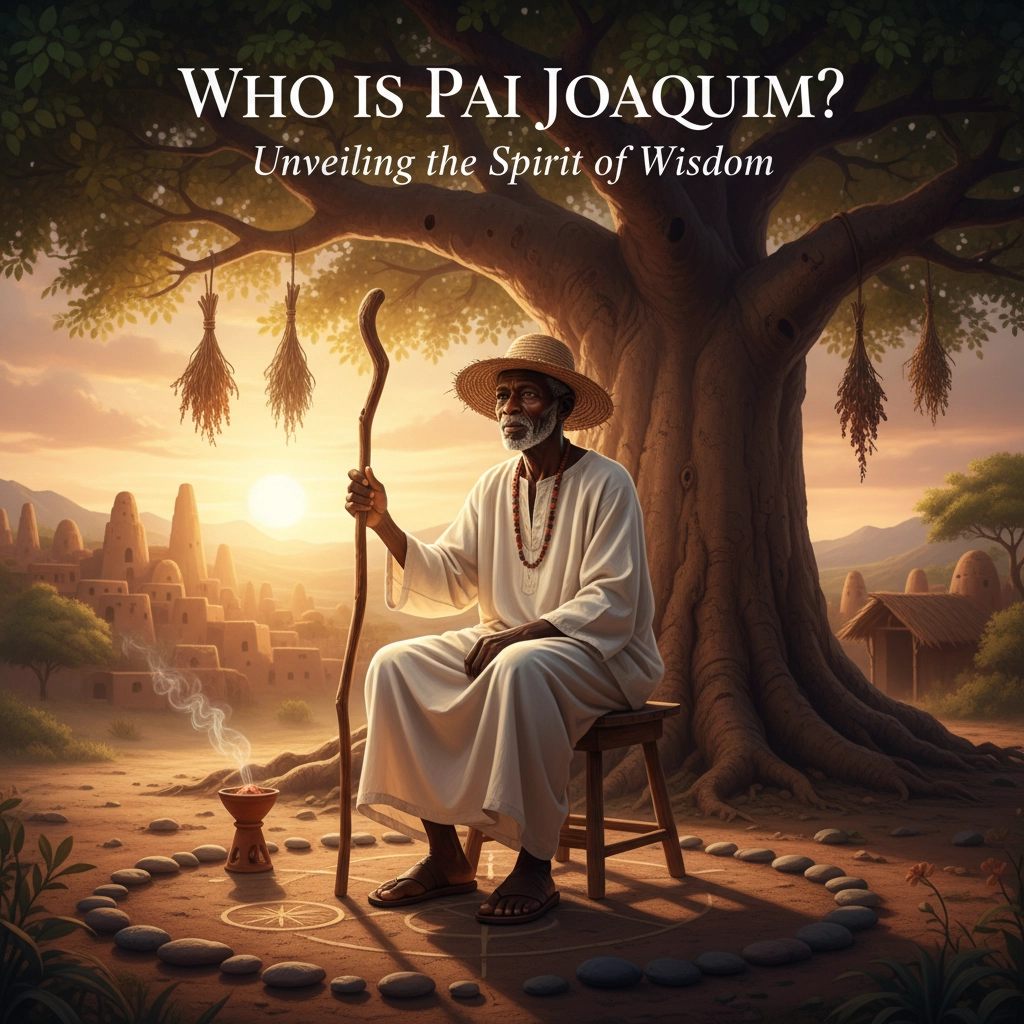
The Pipe: Representing contemplation, wisdom, and the sacred breath that carries prayers to the divine. When Pai Joaquim smokes in spiritual manifestations, he's not just enjoying tobacco: he's creating sacred space and opening channels of communication.
Simple Clothing: Usually depicted in humble work clothes, reflecting his connection to the common people and his rejection of material pretension. His power doesn't come from ornate robes: it flows from authentic spiritual authority.
The Walking Stick: Symbolizing his role as a guide and support for those on spiritual journeys. It represents stability, authority, and the grounding force he provides to spiritual seekers.
Cowrie Shells: When present, they connect him to his African heritage and traditional divination practices, representing the continuation of ancestral wisdom across the Atlantic.
The Personality of a Spiritual Giant
What makes Pai Joaquim extraordinary isn't just his healing abilities: it's his personality that combines iron strength with infinite compassion. Those who encounter his spiritual presence describe someone who is:
Uncompromisingly Direct: He doesn't sugarcoat truth or enable self-deception. Pai Joaquim tells you what you need to hear, not what you want to hear. His guidance cuts through illusion with surgical precision.
Infinitely Patient: Despite his directness, he possesses the patience of someone who has seen centuries of human struggle. He understands that growth takes time and that healing happens in layers.
Fiercely Protective: Once you earn his spiritual protection, Pai Joaquim becomes a formidable guardian. He has particular care for children, the elderly, and those society has marginalized.
Deeply Humble: His power flows from humility, not ego. He serves the divine through service to others, never seeking glory or recognition for his healing work.

Master Healer and Spiritual Counselor
Pai Joaquim's primary role involves healing: not just physical ailments, but the deep spiritual wounds that affect individuals and communities. His healing approach integrates multiple modalities:
Herbal Medicine: Drawing from African and Indigenous plant knowledge, he guides the use of healing herbs and natural remedies. His knowledge spans both common medicinal plants and powerful spiritual botanicals.
Spiritual Cleansing: He specializes in removing negative spiritual influences, breaking generational curses, and clearing energetic blockages that prevent growth and healing.
Emotional Counseling: His wisdom addresses relationship problems, family conflicts, and personal struggles with the insight of someone who has observed human nature across centuries.
Life Guidance: Whether facing career decisions, spiritual development challenges, or major life transitions, Pai Joaquim provides practical wisdom grounded in spiritual understanding.
The Afro-Indigenous Current Connection
Pai Joaquim represents the profound synthesis between African and Indigenous spiritual currents that defines much of Brazilian spirituality. This isn't cultural appropriation: it's sacred collaboration, born from shared experiences of colonization and the recognition of complementary wisdom traditions.
His connection to Indigenous currents manifests through:
Plant Spirit Work: Integration of Indigenous plant knowledge with African spiritual practices, creating powerful healing combinations that honor both traditions.
Earth Connection: Deep reverence for natural forces and elemental spirits that reflects both African earth traditions and Indigenous nature spirituality.
Ancestral Communication: Techniques for connecting with ancestral spirits that blend African divination methods with Indigenous spiritual practices.
Community Healing: Approaches to collective healing that draw from both African and Indigenous concepts of community wellness and spiritual balance.

Modern Relevance of Ancient Wisdom
What makes Pai Joaquim eternally relevant isn't his historical connection: it's his ability to address contemporary spiritual needs with ancient wisdom. In our modern world of disconnection and spiritual hunger, he offers:
Grounding in Tradition: In an age of spiritual shopping and surface-level practices, Pai Joaquim represents depth, authenticity, and genuine transformation.
Healing from Trauma: His expertise in healing generational trauma and spiritual wounds addresses modern understanding of how ancestral pain affects current lives.
Community Building: His emphasis on service to others and collective wellbeing offers alternatives to individualistic spirituality.
Practical Wisdom: His guidance combines spiritual insight with practical action, refusing to separate spiritual development from real-world responsibility.
The Continuing Legacy
Pai Joaquim's influence extends far beyond individual healing sessions or ritual encounters. He represents the living continuity of African spiritual wisdom in the Americas, the transformation of suffering into service, and the power of ancestral love to guide contemporary lives.
His legacy reminds us that true spiritual authority comes not from titles or recognition, but from genuine service, authentic wisdom, and the willingness to transform personal struggle into collective healing. In honoring Pai Joaquim, we honor all ancestors who refused to let their wisdom die with their bodies, who found ways to continue serving across the boundaries of life and death.
The spirit of Pai Joaquim continues to work through those who carry forward his healing mission, who serve their communities with humility and power, and who understand that true strength comes from the willingness to heal rather than harm. His presence in modern spiritual practice isn't just about honoring the past: it's about accessing the eternal wisdom that continues to guide us toward healing, wholeness, and authentic spiritual power.