
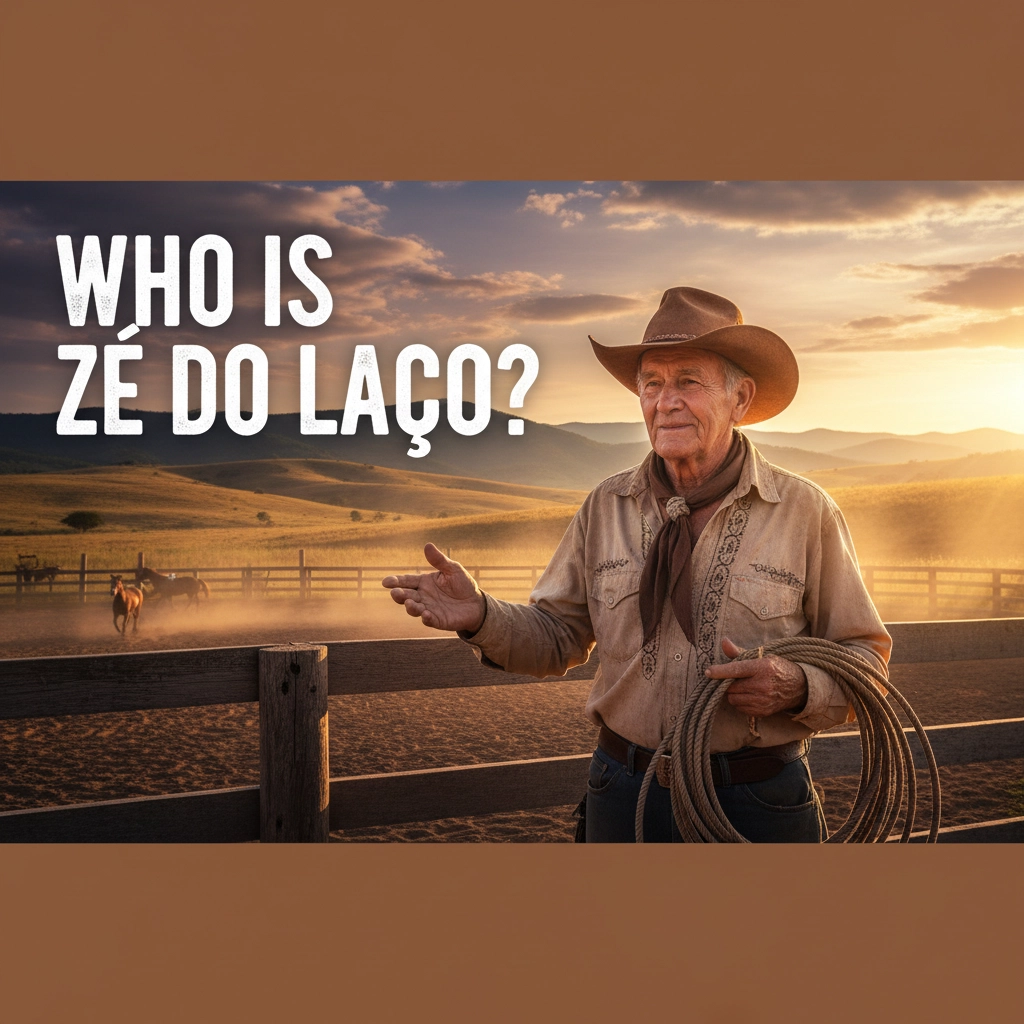
Have you ever wondered about the spiritual cowboys who guard the crossroads between our world and the divine? Meet Zé do Laço, one of the most revered Boiadeiro spirits in Umbanda tradition: a figure whose earthly struggles transformed into celestial wisdom, whose lasso now captures souls for healing rather than cattle for commerce.
In the vast spiritual prairies of Umbanda, where ancient African wisdom meets Indigenous knowledge and European mysticism, few figures command as much respect and devotion as Zé do Laço. This isn't just another spirit guide: this is a master of transformation, a keeper of justice, and a protector of the innocent who rides through the spiritual realms with purpose and power.
The Man Behind the Legend
Zé do Laço's story begins not in the spiritual realm, but in the dusty fields of 19th century Brazil. Born as Pedro, he grew up under the influence of Jesuit priests who shaped his early understanding of faith and morality. But life had different plans for this young man than the quiet contemplation of monastery walls.
When the Revolução Farroupilha erupted in southern Brazil between 1835 and 1845, Pedro found himself swept into the chaos of civil war. This decade-long conflict, where Rio Grande do Sul fought for independence from the Brazilian Empire, became the crucible that would forge his spiritual character. Here, among the smoke of battle and the cries of the wounded, Pedro learned about justice, sacrifice, and the deep bonds that tie men together in times of crisis.

The transformation from Pedro the man to Zé do Laço the spirit didn't happen overnight. After his earthly death, his soul journeyed through what Umbanda calls the "umbral zones": spiritual territories where souls work through their earthly attachments and prepare for higher service. It was during this spiritual apprenticeship that Pedro earned his spiritual name and his calling as a Boiadeiro.
The Spiritual Cowboy's Role in Umbanda
What makes a Boiadeiro different from other spiritual entities in Umbanda? Think of them as the spiritual equivalent of the cowboys who tamed the Brazilian frontier: but instead of herding cattle, they guide souls and protect spiritual territories.
Zé do Laço operates within Aruanda, the spiritual realm where evolved spirits work for the betterment of humanity. His primary role is that of a spiritual protector and guide, someone who helps lost souls find their way and protects those who seek his assistance from negative influences.
When Zé do Laço manifests through a medium during Umbanda ceremonies, practitioners immediately recognize his presence through distinctive characteristics: his firm handshake, his direct way of speaking, and his ability to cut through spiritual confusion with the precision of a well-thrown lasso. He doesn't waste words: every sentence carries weight, every piece of advice serves a purpose.
Attributes and Spiritual Characteristics
Zé do Laço embodies the archetypal qualities of the honorable cowboy: loyalty, courage, protection of the innocent, and an unwavering sense of justice. But these aren't just romantic ideals: they represent real spiritual forces that manifest in his work.
His personality reflects the strength and determination forged during his participation in the Revolução Farroupilha. He speaks with the authority of someone who has faced life's storms and emerged stronger. Practitioners describe him as direct but never harsh, firm but always fair. He has little patience for deception or spiritual cowardice, but shows infinite compassion for those who genuinely seek to improve their lives.
The spiritual energy of Zé do Laço carries the vibration of movement and progress. Where some spirits work through gentle persuasion, he prefers decisive action. If there's a spiritual obstacle blocking someone's path, Zé do Laço doesn't spend time discussing it: he removes it.

Sacred Colors and Symbols
The spiritual iconography of Zé do Laço tells the story of his earthly journey and celestial evolution. His sacred colors: brown and white: represent the earth he worked and the spiritual purity he achieved. Brown connects him to the soil, to hard work, to the practical realm where problems get solved through determined effort. White represents his spiritual elevation and his role as a bringer of clarity and truth.
His primary symbol is, naturally, the lasso: but this isn't just any rope. In spiritual terms, Zé do Laço's lasso represents his ability to capture negative influences and guide lost souls back to the right path. When practitioners visualize his energy, they often see golden ropes of light that can extend across any distance to bring help where it's needed.
The spurs that jingle with his spiritual presence symbolize his readiness for action and his connection to movement and progress. Unlike earthly spurs that urge a horse forward, Zé do Laço's spiritual spurs represent the momentum he brings to stagnant situations.
Rituals and Ceremonial Practices
Working with Zé do Laço requires understanding the ceremonial protocols that honor his energy and facilitate clear spiritual communication. Umbanda ceremonies invoking Boiadeiro spirits typically begin at sunset, when the boundary between day and night mirrors the threshold between physical and spiritual realms.
The ritual space is prepared with elements that honor the cowboy tradition: leather, rope, and symbols of the Brazilian countryside. Practitioners create a spiritual corral using white chalk or cord, establishing sacred space where the Boiadeiro energy can manifest safely.
When calling upon Zé do Laço, practitioners often use specific pontos cantados (sacred songs) that tell his story and invoke his presence. These songs aren't just musical performances: they're spiritual technologies that align the ceremony's vibration with his energy frequency.
During incorporation, when Zé do Laço manifests through a medium, the transformation is unmistakable. The medium's posture changes, becoming more upright and confident. Their voice takes on the cadence of someone accustomed to command. Most notably, their spiritual presence fills the ceremonial space with an energy of protection and decisive action.

Traditional Offerings and Devotions
The offerings made to Zé do Laço reflect both respect for his earthly experience and recognition of his spiritual evolution. Traditional offerings include strong black coffee: the fuel that sustained cowboys during long nights watching over herds. This coffee is served in simple, sturdy cups that honor his practical nature.
Cachaça, Brazil's traditional sugar cane spirit, represents the celebration of hard work completed and obstacles overcome. When offering cachaça to Zé do Laço, practitioners pour it onto the earth, symbolically sharing the spirit's energy with the land he once worked.
Simple foods like cornbread, jerky, and beans honor his connection to the sustenance that sustained frontier life. These aren't elaborate offerings: Zé do Laço appreciates practical gifts that acknowledge his no-nonsense approach to spiritual work.
Tobacco offerings take the form of strong cigarettes or pipe tobacco, representing the contemplative moments when cowboys would sit by the campfire, planning the next day's work or reflecting on life's deeper meanings.
Significance in Modern Umbanda Practice
In contemporary Umbanda practice, Zé do Laço represents something increasingly valuable: authentic spiritual authority combined with practical wisdom. In a world filled with spiritual confusion and competing claims to truth, his energy cuts through deception and provides clear guidance.
Practitioners turn to Zé do Laço when facing situations that require courage, when dealing with spiritual oppression, or when seeking clarity about life direction. His interventions often manifest as sudden insights, unexpected opportunities, or the removal of obstacles that seemed insurmountable.
The Boiadeiro spirits, including Zé do Laço, serve as bridges between the African-derived spiritual technologies of Umbanda and the Brazilian cultural experience. They represent the spiritual evolution possible when different traditions merge respectfully, creating something new while honoring all contributing elements.

The Lasso of Spiritual Liberation
What does it mean to be "lassoed" by Zé do Laço's spiritual energy? Practitioners describe it as being caught up in a current of positive change that moves faster than their conscious minds can process. It's not a gentle nudge toward spiritual growth: it's a decisive intervention that removes people from harmful situations and places them on paths aligned with their highest good.
This spiritual lasso works through synchronicity, intuition, and sometimes through direct spiritual manifestation. People find themselves in the right place at the right time, meeting the right people, receiving the information they need exactly when they need it. The spiritual technology of the lasso ensures that once someone is "captured" by this positive energy, they have the support needed to make necessary life changes.
The wisdom of Zé do Laço teaches that sometimes spiritual progress requires the same kind of decisive action that characterized frontier life. Not every spiritual problem can be solved through meditation and prayer: sometimes you need to saddle up, ride out, and actively engage with the forces that are blocking your path.
Working with the Spirit of the Spiritual Frontier
For practitioners seeking to develop a relationship with Zé do Laço, the approach must match his energy: direct, respectful, and purposeful. He responds to genuine requests for help, especially from those facing injustice or those who need courage to make necessary changes.
The connection deepens through consistent practice and through living according to the values he embodies: honesty, loyalty, protection of the vulnerable, and willingness to work hard for worthwhile goals. Zé do Laço doesn't offer shortcuts to spiritual development: he offers the strength and guidance needed to walk the path with integrity.
His teachings emphasize that spiritual evolution isn't a passive process. Like the frontier life that shaped his character, spiritual growth requires active engagement with challenges, willingness to face difficult truths, and the courage to change when change is needed.
The legacy of Zé do Laço in modern Umbanda practice represents the continuing relevance of traditional spiritual wisdom adapted to contemporary needs. His energy reminds practitioners that authentic spirituality must be practical, that true spiritual power serves justice and protection, and that the greatest spiritual teachers are often those who learned their lessons in the practical school of life experience.
When the spiritual dust settles and the work is done, Zé do Laço rides on: not into the sunset, but toward the next soul who needs guidance, the next injustice that requires correction, the next spiritual frontier that awaits exploration. His lasso remains ready, his wisdom available to all who approach with sincere hearts and genuine need for spiritual transformation.